A standalone blower door test on a typical Ontario house usually costs somewhere around $250 to $400 plus HST, depending on the size of the home and how much diagnosis you want on top of the airtightness number. At Green Canada Energy Advisors, we quote the blower door test cost in Ontario by what you need the result for, because a draft hunt, a rebate claim and a building permit are three different jobs.
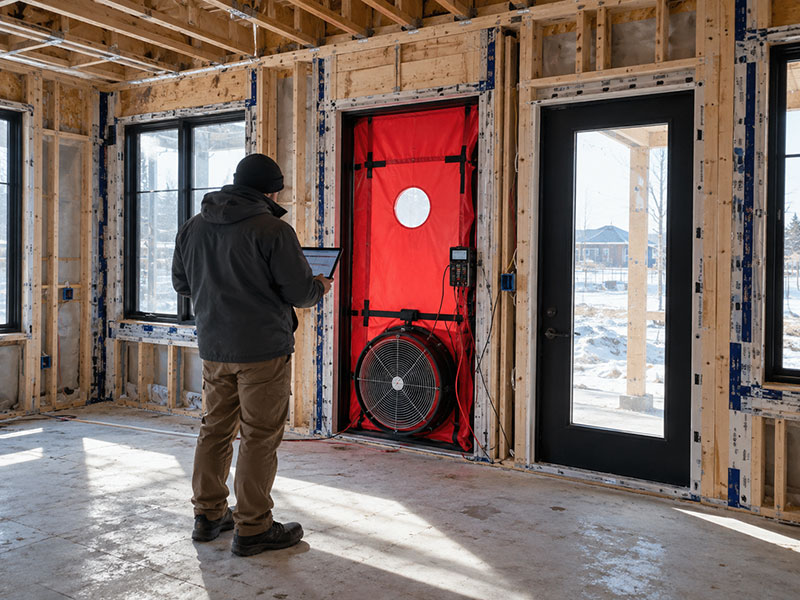
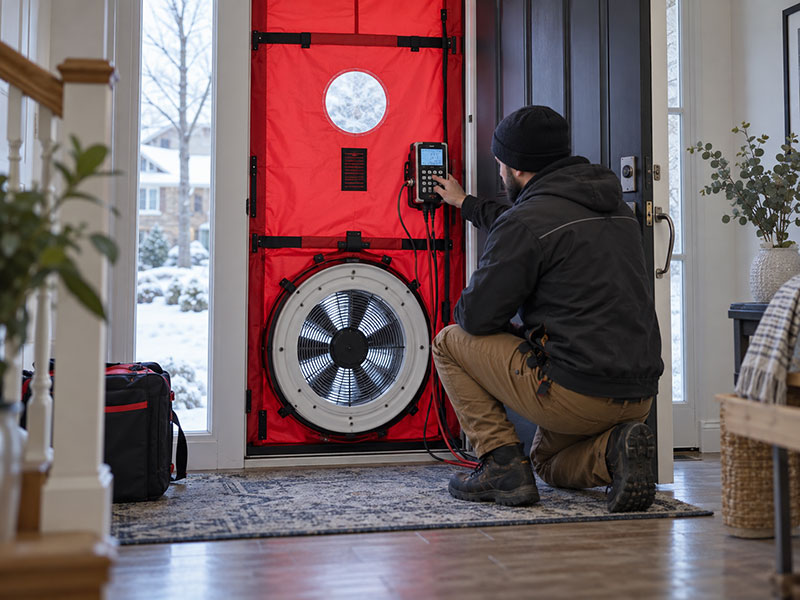
The test is the same core procedure every time. A calibrated fan mounted in an exterior doorway depressurizes the house to 50 pascals, and the gauge reports how much air leaks through the envelope. What changes the price is everything around that measurement: the report, the leak walkthrough, the paperwork and the number of visits. You can see how the procedure itself works on our blower door test service page; this article is about what you pay and which version to book.
The table below compares the five ways Ontario homeowners and builders usually book a blower door test.
| Test type | Who books it | What you receive | How it is priced |
|---|---|---|---|
| Standalone test, existing home | Homeowners chasing drafts or planning air sealing | ACH50 result, leak walkthrough, short report | Flat fee, roughly $250 to $400 + HST |
| Test inside an EnerGuide evaluation | Homeowners claiming renovation rebates | EnerGuide rating, upgrade report, air tightness target | Included in the evaluation fee |
| Mid-construction test, new home | Builders, before drywall | Leak locations while the air barrier is still exposed | Quoted per project |
| Final test, new home | Builders relying on airtightness for SB-12 compliance | CAN/CGSB-149.10 test result for the building department | Quoted per project, often bundled with the mid-construction visit |
| Retest after air sealing | Homeowners or builders verifying repairs | Before-and-after comparison | Separate visit, confirm in the original quote |
Standalone blower door test price: what changes the quote
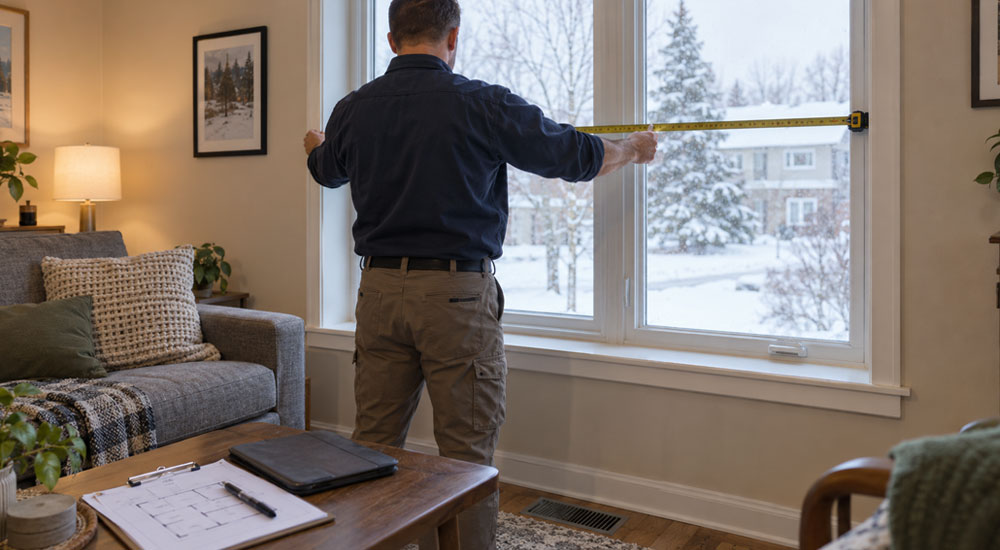
The standalone blower door test price moves with the amount of house, not the amount of fan time. Every test starts with the advisor measuring the interior volume, because ACH50 is air leakage divided by that volume. A 1,400 sq ft (130 m²) bungalow takes a few minutes to measure. A 4,000 sq ft (370 m²) two-storey with a finished basement, cathedral ceilings and a bonus room over the garage takes much longer, and a wrong volume makes the result meaningless.
The second driver is diagnosis. A bare number tells you how leaky the house is, not where the leaks are. Many homeowners want the advisor to walk the house while the fan runs, feeling for airflow at rim joists, attic hatches, pot lights, plumbing stacks, fireplace surrounds and the joint between an attached garage and the house. Adding a thermal camera makes those leaks visible on a cold day and gives your contractor photos to work from. Each of these adds time, and a written report with marked-up photos adds more.
Location matters less in the GTA than in rural Ontario, where travel time is usually added to the quote. Older homes can also need extra setup, such as taping off a chimney that cannot be closed or sealing a vented crawlspace hatch, so the test measures the living space rather than the outdoors.
Ask any tester three questions before you book: does the fee include a leak walkthrough, is the report written or verbal, and what does a retest cost if you air seal afterwards.
Blower door test or full energy audit
A common mistake is buying the right test in the wrong format. A standalone blower door test does not produce an EnerGuide rating, so it cannot be used to claim Home Renovation Savings rebates for insulation, windows or air sealing. Those rebates need a pre-retrofit EnerGuide evaluation, which already includes a blower door test. If rebates are part of your plan, book the evaluation instead of paying twice; our guide to home energy audit cost in Ontario walks through that fee and the rebate that offsets it.
A standalone residential airtightness test makes sense in other situations. You may have a cold bedroom and want to know whether the problem is air leakage or missing insulation before calling a contractor. You may be buying an older home and want a measured number rather than a guess. Or you may be mid-way through an air sealing job that is part of a rebate project and want to check progress before the official follow-up evaluation, since the air sealing rebate depends on beating the target in your upgrade report. A quick interim test can tell your contractor where to focus while the attic is still open, instead of finding out after the final visit that the house missed the target.
There is a practical middle ground too. If a standalone test shows the house is leakier than expected, the result becomes a strong argument for booking the full evaluation next, since air leakage is something the evaluation can turn into a rebate-eligible upgrade.
Blower door test for new construction in Ontario
For builders, the test is often a code requirement rather than a choice. Under SB-12, a blower door test must be carried out during construction when the house relies on airtightness to comply: when the performance path assumes better than 2.5 ACH50 for a detached house or 3.0 ACH50 for an attached one, or when the prescriptive path takes the airtightness credit. The test follows CAN/CGSB-149.10, and the building department may ask for the results. Your SB-12 energy compliance documents should state which path the house is on, so the builder knows at permit stage whether a test is coming.
That is why new-home testing is quoted per project rather than as a flat fee. Builders who depend on the airtightness number are usually better served by two visits. The first happens after the air barrier, windows and exterior doors are in but before insulation and drywall cover the details, when a leak at a rim joist or window rough opening is a tube of sealant rather than a demolition job. The second is the final test that produces the compliance result.
Skipping the mid-construction test is the most expensive way to save money. A house that fails its final test has to be diagnosed and sealed with finishes in place, retested, and then documented again, while occupancy waits. Builders working on a series of similar houses can also use the first few results to adjust their air barrier details before the rest of the phase is framed.
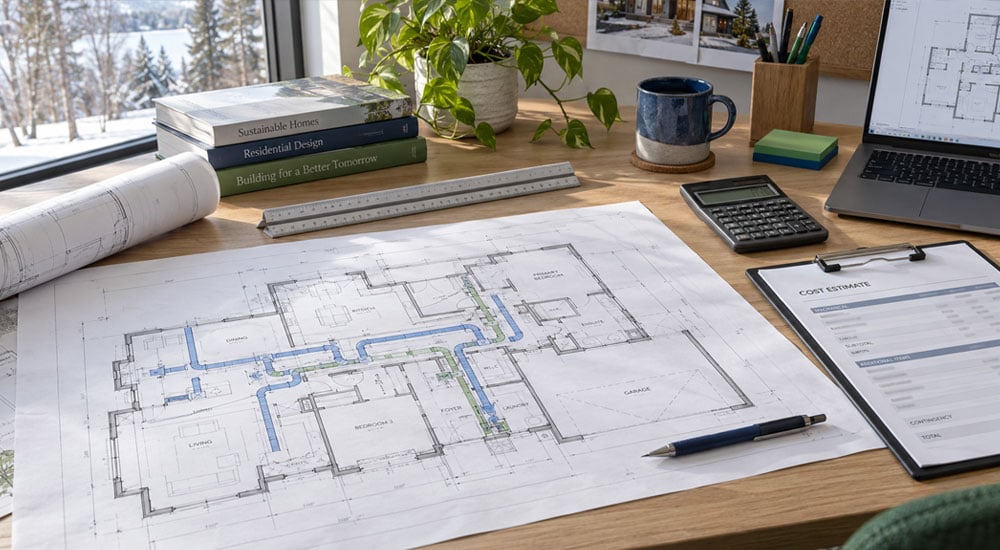
The blower door test cost in Ontario is small next to what it protects, whether that is a rebate cheque, a permit or a comfortable house in January. Decide first what you need the number for, then book the version that delivers it. If you are unsure which test fits your project, contact our team with your address, house size and goal, and we will quote the right visit rather than the most expensive one.