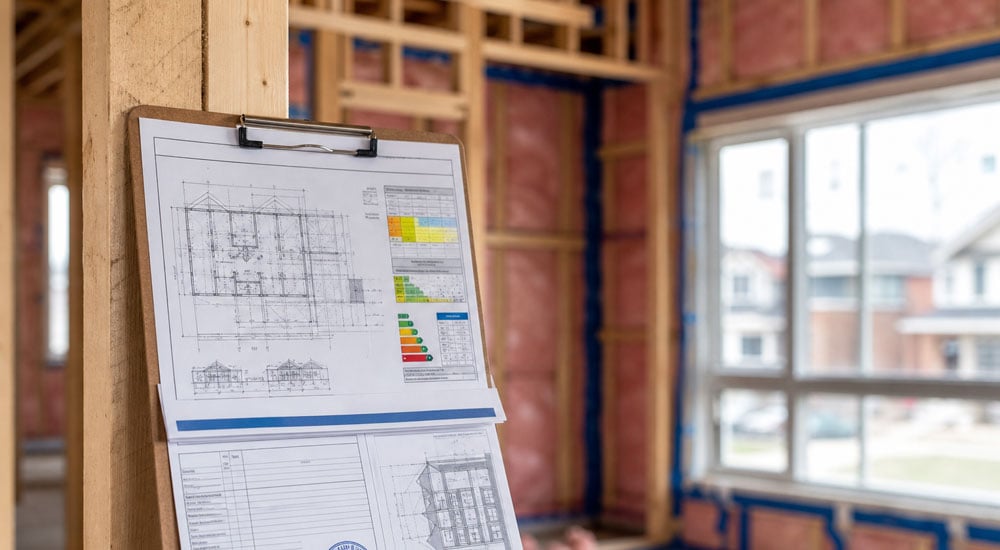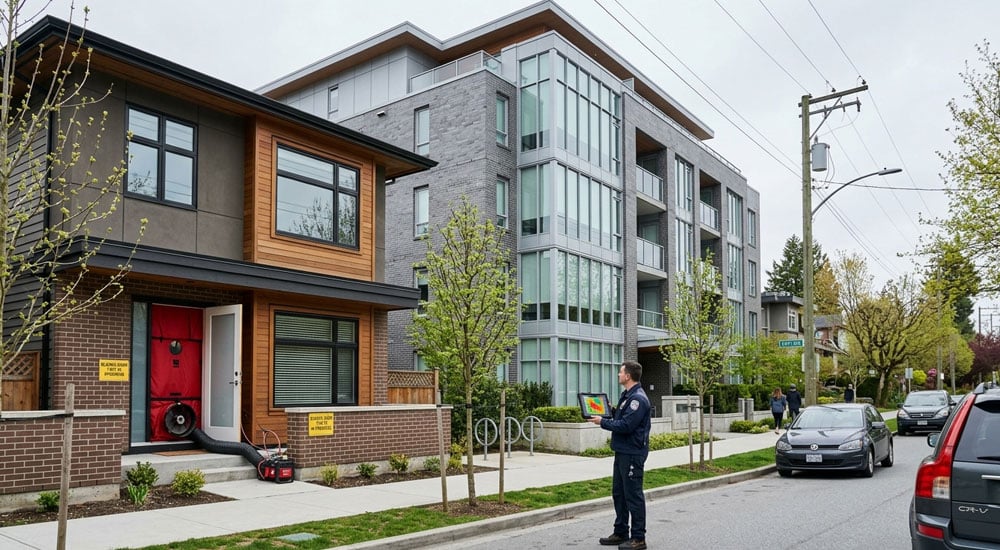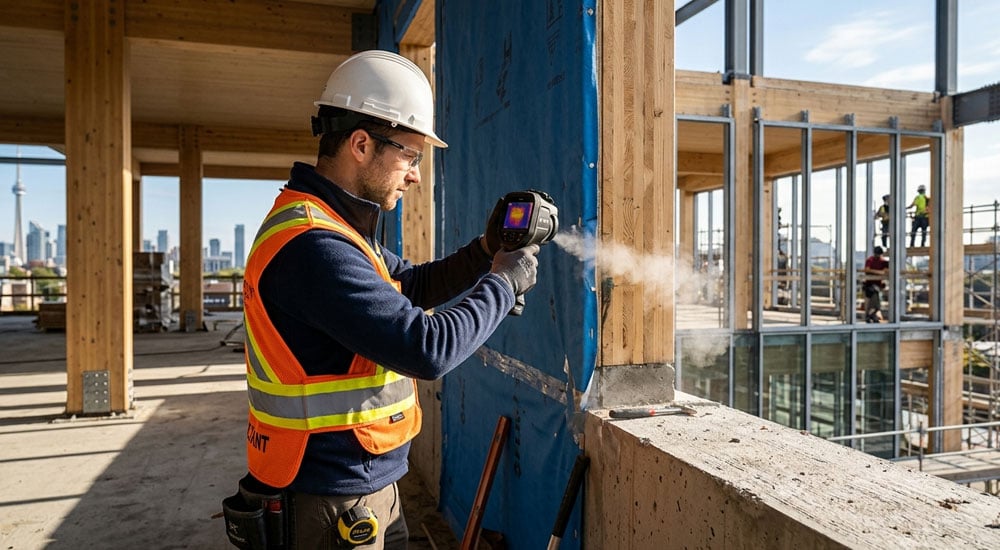
Most BC builders know the Zero Carbon Step Code exists. Far fewer know exactly where their next project stands—and that gap is getting expensive. In 2026, the regulatory landscape has moved fast, with EL-4 (Zero Carbon Performance) already acting as the enforced standard across most of Metro Vancouver. For instance, Maple Ridge is set to adopt EL-4 for all new building permit applications submitted on or after September 1, 2026. With the province pushing toward all-new buildings being zero carbon by 2030, the window to “figure this out later” is officially closed. The builders navigating this transition smoothly rely on experienced Energy Advisors. By aligning design assumptions, reviewing envelope and HVAC systems, and planning airtightness verification early, they prevent costly, late-stage redesigns that often follow compliance gaps during municipal reviews.
Zero Carbon Step Code Levels in Metro Vancouver & BC
Most builders in BC are now navigating EL-1 through EL-4 requirements. Local permit rules determine which Step applies, with municipalities like Maple Ridge set to enforce EL-4 for all building permit applications submitted on or after September 1, 2026. Airtightness, envelope performance, and HVAC design directly influence compliance and prevent costly redesigns. Before we get to the design mistakes, here is a quick breakdown of where the compliance tiers stand today:
| Level | What It Requires | Where It’s Required (2026) |
| EL-1 | Measure & disclose operational greenhouse gas emissions | Provincial minimum floor (all of BC since March 2025) |
| EL-2 | Electrify either space heating OR hot water systems | Various interior municipalities, rural areas |
| EL-3 | Electrify BOTH space and water heating systems | Fraser Valley, many suburban municipalities |
| EL-4 | Full electrification of all systems (Zero Carbon Performance) | Most of Metro Vancouver, Whistler, Squamish, Maple Ridge (Sept 2026) |
The Reality on the Ground: While EL-1 remains the basic provincial baseline, it no longer represents the active benchmark for local development. Over 33 local governments—covering roughly 45% of BC’s population—are already enforcing EL-3 or EL-4. If you are designing a building envelope or mechanical system without confirming your specific permit address bylaws, you are designing blind.
Mistake #1: Assuming the Provincial Minimum Applies to Your Site
Many project teams hear “EL-1 is the provincial baseline” and assume it applies to their site—then get caught off guard during municipal permit review when the local Authority Having Jurisdiction (AHJ) requires EL-4 compliance.
Common pitfalls include:
- Gas-Dependent Layouts: Mechanical systems specified around a gas furnace or traditional boiler that cannot be approved under localized zero-carbon bylaws.
- Undersized Electrical Service: Electrical service capacity and panel sizing calculated without accounting for the combined high-amperage demands of central heat pumps and mandatory EV charging.
- Forced Redesign: Pulling the project back to the schematic stage, causing weeks of engineering rework, extra consultant fees, and delayed construction starts.
The Fix: Verify the exact Step Code and Zero Carbon requirements for your specific permit address before design begins. Compliance depends on local bylaws and the official permit application submission date. Engaging a qualified energy advisor early helps align your envelope, HVAC, and electrical planning from the start, reducing the technical discrepancies that trigger costly late-stage redesigns.

Mistake #2: Treating All-Electric Systems as an Afterthought
We still hear it often on site: “All-electric infrastructure is going to tank our margins.” In our experience conducting energy modelling across BC, that cost spike usually happens when electricity is treated as a late-stage fix rather than a foundational design decision.
What optimized all-electric development looks like when coordinated early:
- Right-Sized Mechanicals: Heat pumps sized to the building’s optimized envelope—rather than oversized “just in case”—help keep equipment costs competitive and prevent operational issues like short-cycling.
- Optimized Electrical Infrastructure: Accurate upfront electrical load calculations help you request the correct service capacity from the utility and avoid unnecessary high-cost transformer or distribution upgrades.
- No Gas Infrastructure: Removing gas service can reduce trenching, utility connection, meter, and coordination costs while supporting compliance with local zero-carbon requirements.
The myth of high all-electric costs often comes from retrofitting an electric mechanical schedule onto an architectural design that assumed natural gas. When mechanical layout and envelope specs are coordinated from day one, compliance stops being an expensive hurdle and becomes part of the baseline build strategy.
Mistake 3: Bringing in Your Energy Advisor at the Permit Phase
This is where we observe the most avoidable rework. An energy advisor brought in at the final permit stage can only act as a compliance checker—marking errors that are already locked into the drawings. An energy advisor brought in at schematic design acts as a vital cost-control collaborator.
Here is what early engagement actively changes:
-
Optimized Specs: Insulation values, window thermal ratings, and overall building form are optimized before architectural choices are finalized.
-
Spatial Coordination: Low ceiling heights or structural drops that would block proper heat pump ducting or HRV placement are caught before framing begins.
-
Streamlined Workflows: Mechanical layouts and envelope air barriers are designed to support each other, rather than handed off between isolated consultants who never spoke.
Hiring an advisor early typically costs less than hiring one late. Early energy modelling for builders eliminates the friction that triggers municipal RFIs, leading to faster permit turnarounds and clean, single-pass designs.
Your Step Code Checklist for the Next Project
-
Verify the Address Baseline: Confirm the exact Zero Carbon Step Code level required by the local municipality before launching architectural layouts.
-
Integrate Energy Advisors Early: Bring in Step Code documentation support during schematic design, long before permit submission.
-
Demand Coordinated Calculations: Ensure your envelope design matches your mechanical specifications to prevent structural drops or oversized systems.
-
Design for 2030 Today: Building toward zero-carbon performance now builds trade familiarity and protects the asset’s long-term market value.
Ready to Streamline Your Permitting Workflow?
If your next project is located in British Columbia, early planning can make the difference between a smooth permit review and a costly redesign. As municipal requirements continue to evolve under the BC Energy Step Code and Zero Carbon Step Code, project teams need more than compliance paperwork—they need a clear understanding of how envelope performance, mechanical systems, electrical infrastructure, and airtightness targets work together.
Green Canada Energy supports builders, developers, architects, and design teams with energy modelling, BC Energy Advisor services, large building airtightness testing, blower door testing, and Step Code compliance support throughout British Columbia. From permit-stage planning and HOT2000 energy modelling to final performance verification, we help identify compliance risks before they affect budgets, schedules, or approvals.
Whether your project is targeting Step 3, Step 4, Net Zero Ready performance, or local Zero Carbon requirements, our team provides practical guidance based on current municipal bylaws, building science principles, and real-world construction conditions. The goal is simple: reduce uncertainty, avoid late-stage revisions, and help keep your project moving forward with confidence.