A Registered Energy Advisor (REA) is recognized under Natural Resources Canada’s EnerGuide Rating System to assess and verify the energy performance of residential buildings. In a new home build, their role is to ensure the home performs as intended—not only in the energy model, but once construction is complete and testing has been finalized.For builders, an energy advisor translates energy code requirements into practical construction decisions.
For homeowners, they provide independent verification that investments in insulation, airtightness, high-performance windows, and mechanical systems are delivering measurable results.As building codes across Canada continue to shift toward performance-based compliance, understanding provincial and municipal requirements has become an important part of early project planning. Working with greencanadaenergy for Step Code energy advisor services can help identify the appropriate compliance pathway before design decisions become costly to revise.
What Does an Energy Advisor Do During a New Home Build?
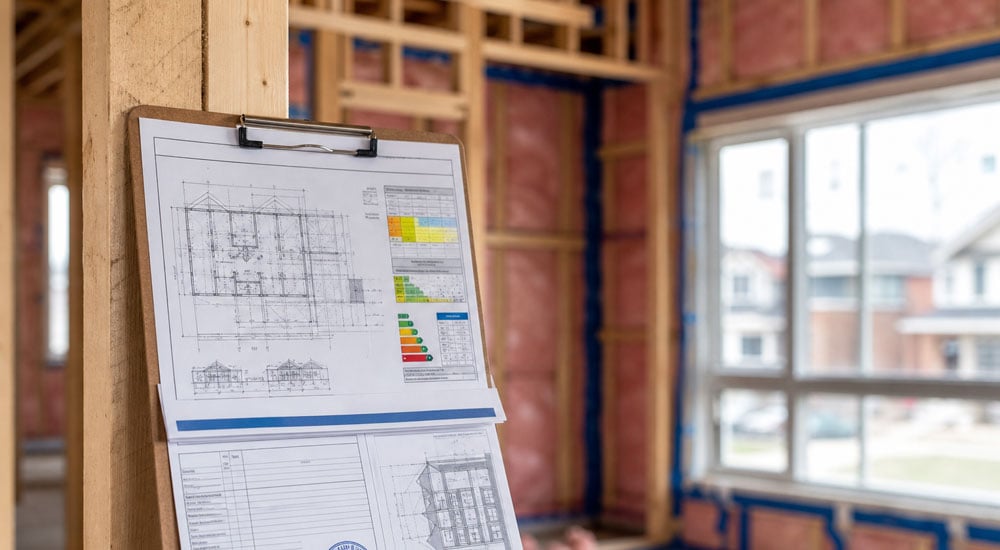
An energy advisor works across the full lifecycle of a new construction project — not just at the end when testing happens. In the design phase, they use HOT2000, the nationally accepted simulation tool for low-rise residential buildings, to model the home’s projected energy consumption based on insulation values, window specifications, mechanical systems, airtightness targets, and local climate data. This allows builders and homeowners to compare design options and understand the real performance and cost tradeoffs before construction begins.
The question of when to bring in an energy advisor comes up often, and the answer is straightforward: as early as possible. Changes to wall assemblies, mechanical systems, or window specifications cost far less at the design stage than after framing is complete. Advisors brought in at the end of a project can still complete the required testing and labelling, but they have little room to improve a home’s performance if the construction decisions have already been made.
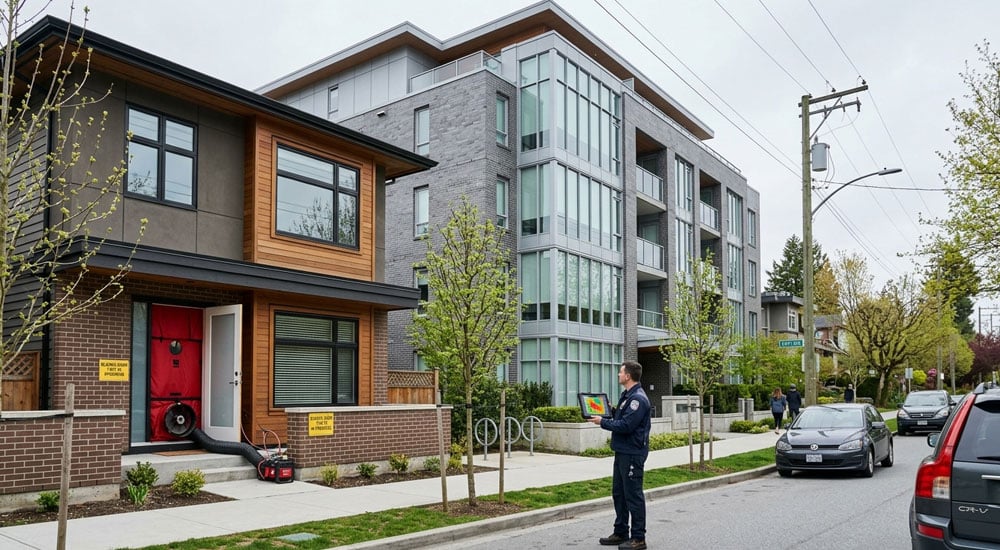
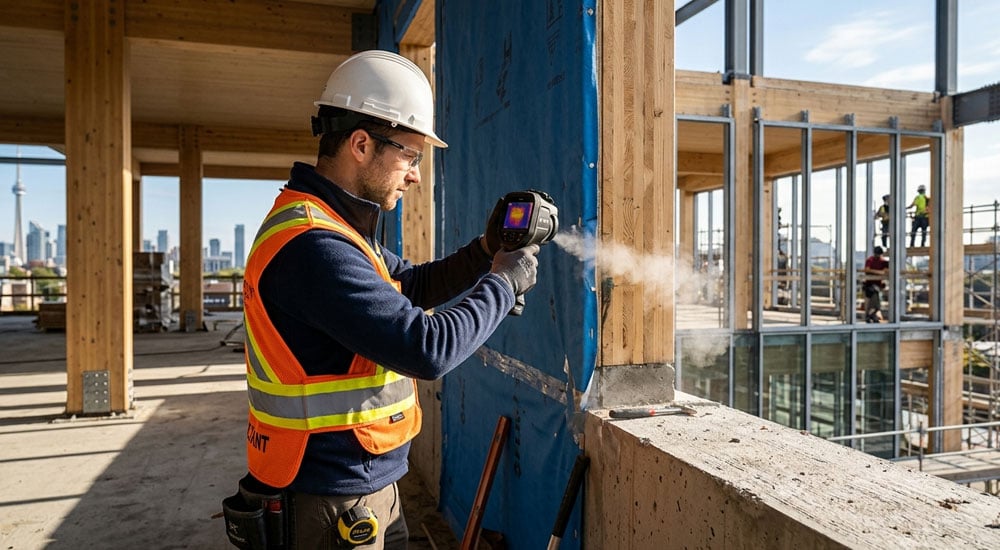
During the build, the advisor conducts staged inspections to confirm that energy-efficient details — air barriers, insulation continuity, window installation, mechanical equipment — are being installed as modelled. At completion, a blower door test measures actual airtightness. The result is an official EnerGuide label that documents the home’s energy performance in a format recognized by federal and provincial rebate programs, mortgage lenders, and future buyers.

Why Energy Advisors Matter for Code Compliance in Canada
Canadian building codes are no longer a single national standard. The 2025 National Model Codes, released by the Canadian Board for Harmonized Construction Codes, introduced a tiered energy performance framework with both prescriptive and performance-based compliance paths. Provinces adopt and adapt these codes at their own pace — British Columbia has been advancing through the BC Energy Step Code since 2017, and many municipalities now require Step 3 or higher for new permits. A builder working across different jurisdictions faces genuinely different requirements from one project to the next.
Whether an energy advisor is legally required depends on the province and the certification being pursued. For ENERGY STAR for New Homes, R-2000, and CHBA Net Zero, their involvement is mandatory. For EnerGuide ratings tied to rebate programs, it is also required. Some provincial building codes — including parts of the BC Energy Step Code — require energy modelling and on-site verification that only a registered advisor can provide. Even where it is not strictly mandated, most builders working toward any recognized performance standard will need one to complete the process.
An energy advisor also goes beyond minimum compliance. They can model the cost difference between performance tiers and show what a homeowner would save in utility costs over time — analysis that is increasingly relevant as buyers, lenders, and appraisers begin factoring energy performance into valuations.
EnerGuide, ENERGY STAR, R-2000, and Step Code Explained
Canada’s energy certification landscape can be difficult to navigate for builders and homeowners approaching it for the first time. The table below outlines the main programs a registered energy advisor works with in new home construction.
| Program | Administered By | Applies To | Notes |
| EnerGuide Rating System | Natural Resources Canada | Builders and homeowners | Required for most federal and provincial rebate programs |
| ENERGY STAR for New Homes | Natural Resources Canada | Builders seeking a performance label | On-site verification by a registered energy advisor is mandatory |
| R-2000 | Natural Resources Canada | High-performance new builds | Stricter than ENERGY STAR; includes indoor air quality requirements |
| BC Energy Step Code | BC Government | Builders in British Columbia | Tiered framework; Step 3 or higher required in many municipalities |
| CHBA Net Zero Label | Canadian Home Builders’ Association | Net-zero new builds | Most rigorous residential standard; energy advisor required throughout |
| 2025 NBC Energy Tiers | CBHCC / NRCan | All new construction | Tiered compliance paths; province-dependent adoption timelines |
Benefits of Hiring an Energy Advisor Early in the Build
For homeowners, the practical value of working with an energy advisor on a new build extends well beyond the EnerGuide label. A home that has been properly designed for energy performance and verified through inspection and testing will typically deliver:
- Lower monthly utility costs compared to homes that meet only minimum code requirements
- Fewer comfort issues — drafts, uneven temperatures, cold floors — linked to air sealing and insulation gaps
- Better indoor air quality from properly balanced mechanical ventilation, which matters more in a tightly built home
- A documented EnerGuide rating that supports green mortgage products, insurance discounts, and higher resale value
- Eligibility for provincial and utility rebate programs that require an EnerGuide evaluation as a condition of funding
As for cost, energy advisor fees vary by province, project size, and the scope of services involved. For a standard low-rise new build, advisory and labelling services typically range from a few hundred to a couple of thousand dollars — a small fraction of what it costs to retrofit a home that was built without adequate performance planning. For builders, the return is also reputational: homes that perform as promised generate referrals, and documented EnerGuide ratings give buyers something credible to compare.
Conclusion
A registered energy advisor for new home builds in Canada provides independent, technically grounded oversight from design through final testing. In a regulatory environment where energy codes are tiered, province-specific, and still evolving, their role is practical rather than optional for most serious new construction projects in Canada. The investment in early involvement pays off in code compliance, rebate eligibility, lower operating costs, and a home that performs as intended for its full-service life. Working on a new home build and want to understand which energy performance tier applies to your project — or what an EnerGuide rating could mean for your rebate eligibility?